
2D Echo Test in Gurgaon
2D Echo Consultation in Sector 69, Gurgaon
Looking for quality 2D Echo Test services in Gurgaon? You can get all your cardiac tests and consultations done by Dr. Jatin Yadav at Heart Cure Clinic. The 2D Echo (2D Echocardiography) test is an ultrasound-based examination method used to capture real-time images of the heart.
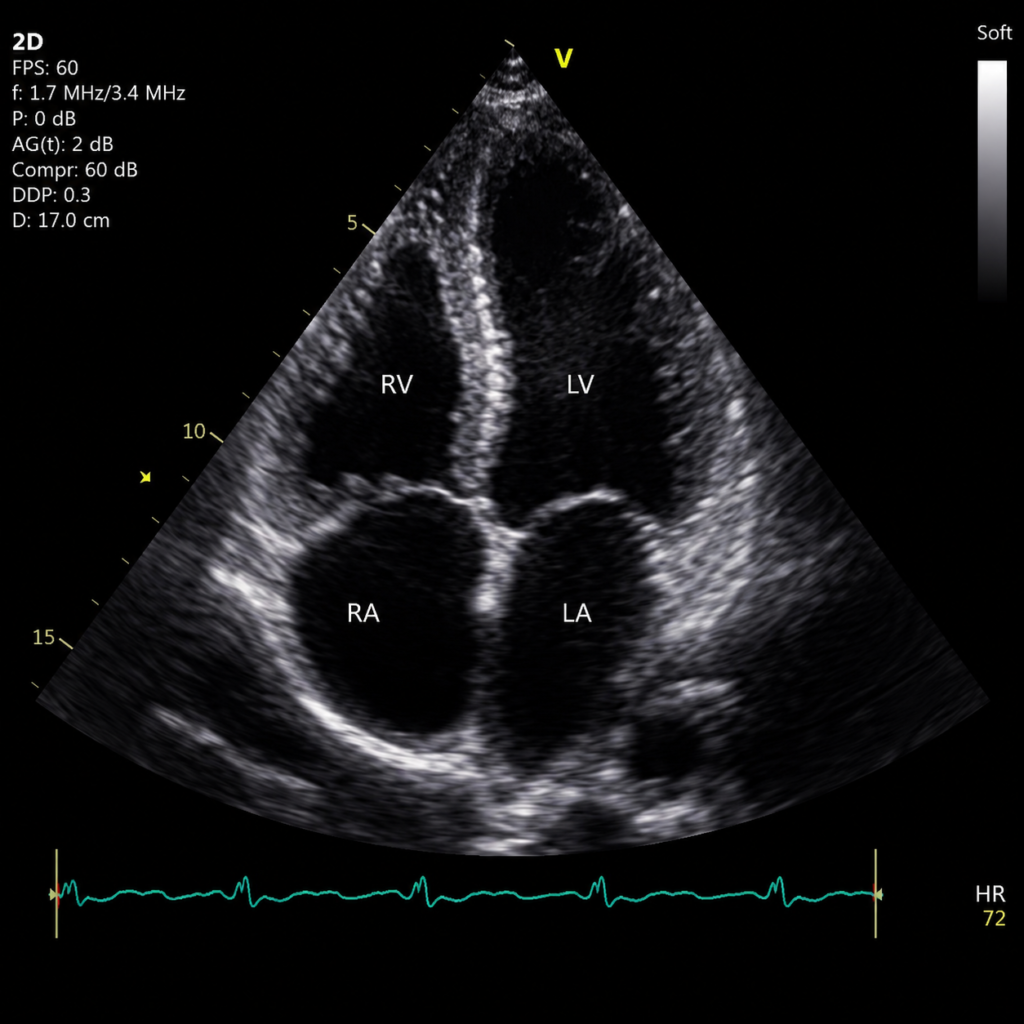
What is a 2D Echo Test?
2D Echo is another name for 2D Echocardiogram. In a 2D Echo Test, sound waves are used to produce high-quality images of the heart. This test is used to check the size, structure, movement, and functioning of the heart without any invasive or radioactive procedures.
2D Echocardiograms can be useful in diagnosing and monitoring various heart problems such as valve disorders, heart failure, congenital heart problems, and malfunctioning of heart muscles.
When Do You Need a 2D Echo?
Your cardiologist may recommend a 2D Echo if you experience:
- Chest pain or discomfort
- Shortness of breath
- Irregular heartbeat (palpitations)
- High blood pressure
- Heart murmurs
- Dizziness or fainting episodes
- Swelling in the legs
- Abnormal ECG findings
- History of heart attack or heart disease
A 2D Echo provides valuable information about heart health and helps guide further treatment decisions.
What Can a 2D Echo Detect?
A 2D Echo Test can help identify:
Heart Valve Disorders
Detection of valve narrowing (stenosis) or leakage (regurgitation).
Heart Failure
Assessment of the heart’s pumping function and ejection fraction.
Enlarged Heart Chambers
Evaluation of chamber size and structural abnormalities.
Congenital Heart Defects
Identification of birth-related heart abnormalities.
Pericardial Effusion
Detection of fluid accumulation around the heart.
Cardiomyopathy
Assessment of heart muscle weakness or thickening.
How is a 2D Echo Test Performed?
The procedure is simple, painless, and usually completed within 20–40 minutes.
Step 1
You will lie comfortably on an examination table.
Step 2
A special gel is applied to the chest.
Step 3
A transducer (ultrasound probe) is moved over the chest area.
Step 4
Real-time images of the heart are displayed on a monitor.
Step 5
The cardiologist reviews the images and explains the findings.
No injections, incisions, or hospital admission are required for a routine 2D Echo examination.
Benefits of a 2D Echo Test
- Non-invasive procedure
- No radiation exposure
- Painless and safe
- Real-time assessment of heart function
- Early detection of heart conditions
- Useful for monitoring ongoing cardiac treatment
Because it provides detailed information about heart structure and function, 2D Echo remains one of the most important diagnostic tools in cardiology.
Why Choose Heart Cure Clinic for 2D Echo Consultation in Gurgaon?
Experienced Cardiac Specialist
Consultation and interpretation by an experienced heart specialist.
Comprehensive Heart Evaluation
Assessment of symptoms, risk factors, ECG findings, and heart health status.
Convenient Sector 69 Location
Easily accessible for patients from:
- Sector 69 Gurgaon
- SPR Road
- Sohna Road
- Golf Course Extension Road
- Vatika Chowk
- Southern Peripheral Road
Personalized Heart Care
Individualized treatment planning based on test findings and medical history.
Who Should Get a 2D Echo Test?
A 2D Echo may be recommended for:
- Patients with chest pain
- Individuals with hypertension
- People with diabetes and cardiac risk factors
- Patients with breathlessness
- Individuals with suspected valve disease
- Patients with previous heart attack history
- People undergoing preventive cardiac screening
FAQ
Frequently Asked Questions
No. The standard 2D Echo procedure is non-invasive and completely painless. It may only be mildly uncomfortable due to pressure exerted by the ultrasound device.
An ordinary 2D Echo usually takes 20 to 40 minutes to be done, based on the specific needs of the patient.
Fasting before a regular transthoracic 2D Echo is not necessary.
Though a 2D Echo may diagnose issues involving blood flow and heart muscle conditions, angiography would need to be done to detect blockages of heart arteries.
While both tests are helpful in assessing heart health, they do not have the same purpose. The ECG test measures the heart’s electrical activity while the echo gives an image of the heart’s anatomy and functions.